
Heat protection: Muffler heat shield can protect nearby components from heat damage by reducing the amount of heat that radiates from the exhaust system.
Improved performance: By reducing the amount of heat that radiates from the exhaust system, muffler heat shield can help improve the performance of nearby components, such as the engine or transmission.
Increased durability: Muffler heat shield can help increase the durability of nearby components by reducing the amount of heat-related stress they experience.
Enhanced safety: By reducing the amount of heat that radiates from the exhaust system, muffler heat shield can help reduce the risk of fire or other safety hazards.
Overall, using muffler heat shield can help improve the performance, durability, and safety of a vehicle or other machinery.
What Is Muffler Heat Shield
Muffler heat shields are essential components found under vehicles. They protect parts from the intense heat generated by the engine and exhaust system. They act as thermal barriers. And are made of materials like aluminum, stainless steel, or fiberglass.
Muffler heat shield are used in various applications across different sectors to protect against high temperatures and prevent heat damage. Some of the most common applications of muffler heat shields are in the automotive, aerospace, and industrial sectors.
Automotive Sector
In the automotive sector, muffler heat shields are commonly used to protect the engine, exhaust system, and other components from high temperatures generated during operation. For example, the exhaust system generates high temperatures that can damage the surrounding components and even ignite nearby materials. To prevent this, muffler heat shields are used to reflect or absorb the heat energy. Similarly, muffler heat shields are used to protect the engine from high temperatures generated during operation. muffler heat shield are also used in the brake system to prevent brake fade caused by high temperatures.
Aerospace Sector
In the aerospace sector, muffler heat shields are used to protect against high temperatures generated during re-entry into the Earth’s atmosphere. During re-entry, the spacecraft generates high temperatures due to the friction between the atmosphere and the spacecraft’s surface. To prevent heat damage to the spacecraft and the crew, muffler heat shields are used to absorb or dissipate the heat energy. For example, the muffler heat shield on the Apollo spacecraft was made of a material called Avcoat, which was designed to absorb heat energy by melting and evaporating.
Industrial Sector
In the industrial sector, muffler heat shields are used to protect against high temperatures generated during various processes. For example, muffler heat shields are used in furnaces to protect the surrounding components from high temperatures generated during the heating process. muffler heat shield are also used in the oil and gas industry to protect the pipelines from high temperatures generated during the transportation of oil and gas. In addition, muffler heat shields are used in the chemical industry to prevent heat damage to the surrounding components during various chemical processes.
A very thin piece of aluminum can make a pretty good muffler heat shield because (a) it reflects thermal radiation very well and also because (b) it emits (or "gives off") heat very inefficiently.
Remember how your momma covered the Thanksgiving turkey with aluminum foil? Foil reflected the oven's thermal radiation, and the turkey cooked evenly from top to bottom. As a radiant barrier, aluminum foil performs so well that it actually needs to be removed, briefly, for the turkey's skin to brown nicely. Used as a radiant barrier (i.e. a "reflector"), a cut or tear isn't a big deal so long as it doesn't turn into a gaping hole. After letting the turkey's skin brown, your mom probably removed the bird from the oven and replaced the loose foil covering. Since aluminum doesn't emit much heat, the turkey stayed hot until mom's praline sweet potatoes and incredibly awesome butter rolls were ready. I'd trade all the holidays in the year for mom's Thanksgiving dinner, but I digress... As a reflector, it shouldn't surprise you that a shiny surface outperforms an unpolished surface and that a clean surface outperforms a dirty surface. Anodized aluminum generally outperforms painted aluminum.
The concept of high reflectivity is more intuitive than the concept of low emissivity. To understand emissivity, think of a light bulb. When turned "on", a light bulb emits light. If you paint the bulb black, there's no light emission. You can put your hand relatively near a black-painted light bulb and you'll feel relatively little heat on your skin. Just don't touch the painted light bulb, or you'll get a hard lesson in heat conductivity! (Aluminum is also a real good conductor of heat.)
What if it isn't practical to mount the muffler heat shield with an air gap on either side? Since aluminum is only a pretty good reflector and not a perfect one, some heat will inevitably be absorbed into the muffler heat shield itself. We can at least make an attempt to insulate one side of the muffler heat shield from the other. This can be done by laminating together several layers of material. For example, the muffler heat shield might be constructed of two thin layers of aluminum, with fiberglass or ceramic batting in between.
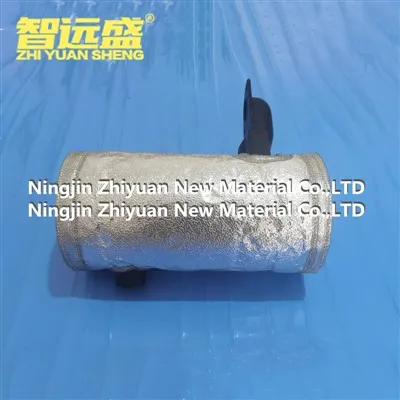
Muffler heat shields are usually intended for keeping the driver compartment comfortable. In some cases they're intended for protecting parts of the fuel, electrical, brake, or suspension systems. They can potentially have other benefits too, including noise reduction.
Heat shields work by reflecting heat downward and away from the car, or back into the exhaust system. (From a performance point of view, it's preferable to keep exhaust gases as hot as feasible until they exit the tailpipe.) A muffler heat shield will inevitably get hot with the rest of the exhaust system, but if it's designed properly it will minimize heat emission or conduction upward into the car. Ideally, there should be an air gap between the muffler and the heat shield, and also a second air gap between the heat shield and whatever it's protecting. These air gaps should be as large as feasible. Usually it's preferable to mount heat shields to the exhaust system because this reduces or eliminates conduction of heat and noise into the body of the car. In the real world of hot-rod British sports cars though, we usually have to make compromises of space, of convenience, and of cost.
Okay, honestly, I just wanted the challenge of designing and fabricating good, effective heat shields from scratch. The problem, however, is aggravated on my car because the muffler installation is particularly "tight". My car was converted to V8 power almost twenty years ago, and back then I wasn't thinking about heat shields. Furthermore, store bought heat shields would have cost at least four or five times as much as I wanted to spend. I figured I could fabricate two home-made heat shields in an hour or two, and with a budget of just four or five dollars apiece.
Muffler heat shield are critical components used for thermal management in a wide range of applications, and their purpose doesn’t tend to vary much from market to market—whether they are used on a car or a spacecraft.
Essentially, a muffler heat shield is a thermal barrier designed to protect objects from overheating. In the automotive sector, they are typically used to isolate the engine block to prevent heat damage to bodywork and internal components. They can also provide performance enhancements by reducing under-hood heat and intake air temperature (IAT), which is key for optimal engine performance.
In this article, we will explore some of the different types of muffler heat shields and the materials used in their construction. We will also take look at conventional muffler heat shield materials versus more innovative solutions.
Two Types of muffler heat shield: Fixed Vs. Flexible
There are two main kinds of muffler heat shields for cars: fixed, or rigid components; and flexible components. A rigid muffler heat shield might be fabricated from solid steel, but given the additional weight and subsequent loss of performance, aluminum sheet is preferable. Aluminum can also be used for flexible muffler heat shields which are more conformable and lighter weight. Conventional wisdom associates thicker, denser materials with greater thermal capacity, but precision thermal coatings have enabled engineers to leverage a wide range of materials for thermal barrier applications.
Thermal textiles are increasingly used for automotive insulation, mainly for exhaust systems and cabin insulation. But high-temperature fabrics comprised of fiberglass or silica with proprietary coatings can also be used for thermal barriers in engine environments. These novel muffler heat shields combine the extreme heat resistance of ceramic coatings with the conformability of thin sheeting, yielding an optimal solution for lightweight muffler heat shielding in automotive applications.
One of the benefits of fabricated muffler heat shields is the reduction of engine block weight which contributes to greater fuel efficiency, faster acceleration, and so on. Their increased formability also makes it easier to shield specific components from under-hood heat, such as the air intake system. By reducing the IAT, engineers can effectively prevent long-term performance reductions associated with temperature-induced engine timing variations. Similar benefits can be obtained by shielding engine mount vents too.


1. Research the application’s specific needs and requirements to determine the type of muffler heat shield required.
2. Consider the operating temperature range of the application and select a muffler heat shield capable of withstanding the required temperature range.
3. Choose a material that has the required properties for the specific application, such as thermal conductivity, weight, and cost.
4. Consult with a muffler heat shield manufacturer or supplier to ensure that the selected muffler heat shield is suitable for the application and meets all necessary requirements.
5. Consider the installation requirements of the muffler heat shield, such as the size, shape, and attachment method, to ensure that the muffler heat shield can be installed correctly.
In summary, selecting the right muffler heat shield for a specific application requires careful consideration of factors such as the application, operating temperature range, and material. Tips for selecting the right muffler heat shield include researching the specific needs and requirements of the application, choosing a material with the required properties, and consulting with a muffler heat shield manufacturer or supplier. By selecting the right muffler heat shield, it is possible to protect against heat damage and improve the efficiency and safety of the application.
Ningjin Zhiyuan New Material Co., Ltd. was established in 2002, mainly committed to the development, production and sales of sound-cancelling, heat insulation and high performance heat resistant fiber products.
The main products: Fiberglass sound insulation cotton, Fiberglass pipe (Glass Fiber Tube), fiber Glass molded parts, basalt fiber sound insulation cotton, Fiberglass Needle Mat, basalt fiber Needle Mat, Fiberglass Heat Shield mat, basalt fiber Heat Shield mat, basalt fiber tube, basalt fiber strip, muffler Heat Shield, exhaust Heat Shield, Turbocharger Parts Heat Shield, purifier Heat Shield, Battery insulation cover, Generator Heat Shield, Engine sound insulation cotton, wiring harness Heat Shield, oil tube Heat Shield, fuel tank Heat Shield, Generator unit Heat Shield ETC.

Q: Is a muffler heat shield necessary?
Q: What happens if you remove heat shield from muffler?
Q: Can sheet metal be used as a heat shield?
Q: How much does it cost to repair a muffler heat shield?
Q: Is it OK to drive a car without a heat shield?
Q: What is the purpose of a muffler heat shield?
Q: Does the heat shield cover the catalytic converter?
Q: Can I use exhaust wrap instead of heat shield?
Q: How long can you drive without a heat shield?
Q: Does aluminum foil work as a heat shield?
Q: Can you run a catalytic converter without a heat shield?
Q: Can you drive with a damaged heat shield?
Q: What happens if heat shield goes bad?
Q: How much is a new heat shield?
Q: How hot does car heat shield get?
Q: What are exhaust heat shields made of?
Q: Why does a catalytic converter need a heat shield?
Q: Are catalytic shields worth it?
Q: Is it OK to remove heat shield above muffler?
Q: Does heat shield wrap work?
We're well-known as one of the leading muffler heat shield manufacturers and suppliers in China. Please feel free to buy customized muffler heat shield at low price from our factory. For quotation, contact us now.
affordable muffler heat shield, heat shield for fiberglass, heat shield for specification market(0/10)



