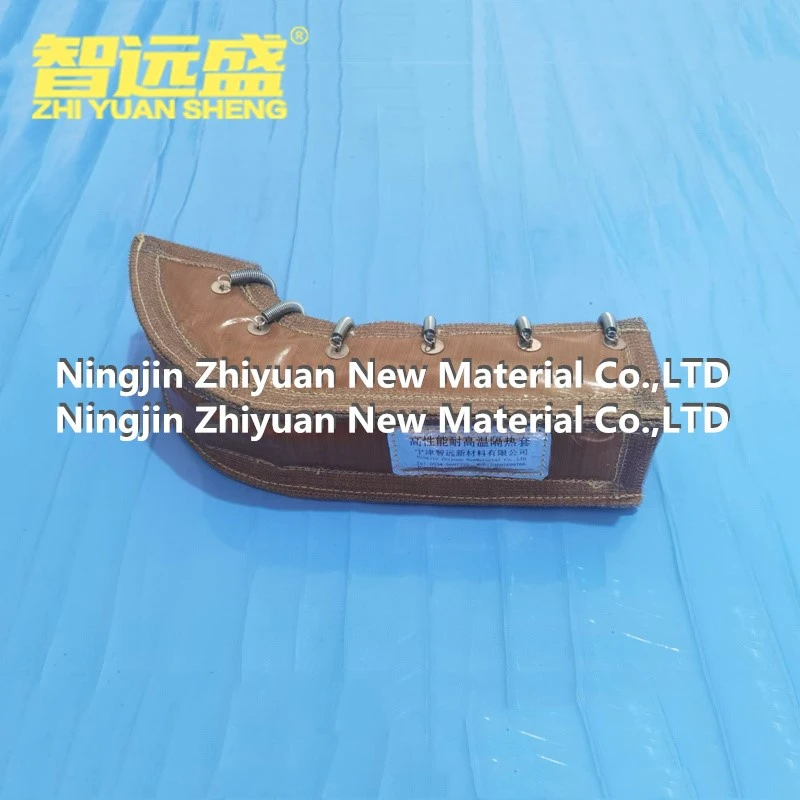
What is the purpose of Exhaust Insulation Jacket
 Jan 03, 2025|
 Exhaust Insulation Jackets are a type of protective equipment that plays a key role in many industrial and mechanical fields. In the engine compartment of a car, the exhaust system temperature is extremely high. The exhaust insulation sleeve tightly wraps the exhaust pipe, which can effectively block the heat from radiating outward. This not only prevents high temperature from causing thermal damage to surrounding components such as rubber tubes and wire harnesses, avoiding their aging, melting or short circuit, ensuring the safety of vehicle operation, but also reduces the heat transfer to the engine compartment, lowering the overall temperature in the cabin, and facilitating the stable operation of other precision components.
In industrial plants, large mechanical equipment generates a large amount of hot exhaust gas during operation. Exhaust Insulation Jackets are installed in exhaust pipes. On the one hand, they reduce the ambient temperature of the workshop and improve the working conditions of workers. On the other hand, they reduce heat loss and improve energy utilization efficiency, saving energy and reducing consumption for enterprises.
In the field of aerospace, the exhaust temperature of aircraft engines is beyond imagination, and the existence of exhaust insulation sleeves is crucial. It protects the fuselage structure and internal electronic components from extreme high temperatures, maintains the normal operation of various aircraft systems, and ensures the smooth progress of flight missions. It is an indispensable part of aviation safety and performance stability. In short, exhaust heat insulation sleeves have irreplaceable uses in many industries, such as protecting equipment, saving energy and increasing efficiency, and ensuring safe operation, due to their heat insulation properties.
Exhaust Insulation Jackets play an indispensable role in many fields such as automobiles, industry, and aerospace due to their efficient heat insulation performance. It can not only protect surrounding equipment from high temperature damage and ensure the stable operation of the system, but also improve energy efficiency and reduce operating costs by reducing heat loss.