





What Is The Difference Between Fiberglass Muffler Packing Material And Ordinary Soundproofing Materials?
 Oct 25, 2026|
Although Fiberglass Muffler Packing Material and ordinary soundproofing materials are both used for noise control, they differ significantly in their working principles, material structures, operating environments, and installation methods. Understanding these differences helps users select suitable materials based on equipment characteristics and actual noise reduction requirements, avoiding performance problems caused by inappropriate material selection.
First, their primary functions are different. Fiberglass Muffler Packing Material is a sound-absorbing material designed to absorb some of the sound energy entering its fiber structure, thereby reducing sound propagation and reflection inside a muffler. Ordinary soundproofing materials generally focus on preventing sound from passing through a structure. For example, they may reduce sound transmission by increasing the mass of a barrier, improving sealing, or incorporating multiple layers of materials. However, ordinary soundproofing materials represent a broad category that also includes certain sound-absorbing products. Therefore, the two categories are not entirely mutually exclusive.
Second, their material structures differ. Fiberglass Muffler Packing Material typically consists of numerous fine glass fibers that form interconnected spaces. When sound waves enter these spaces, air movement encounters resistance from the fibers, causing some of the sound energy to dissipate through friction and heat exchange. In contrast, some conventional sound insulation materials have relatively dense structures and primarily reduce sound transmission through their mass, stiffness, and structural configuration.
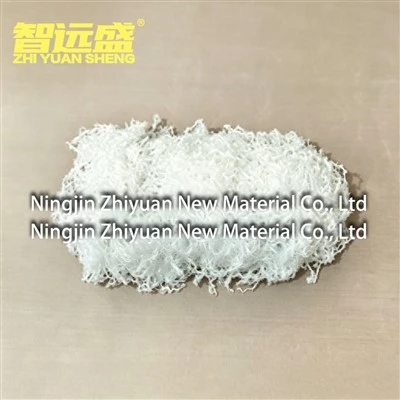
Their operating environments also differ. Fiberglass Muffler Packing Material is often required to withstand temperature fluctuations, airflow impact, and equipment vibrations inside exhaust systems. Therefore, heat resistance, structural stability, and fiber retention are important considerations. Conventional building soundproofing materials are generally used in more stable environments, where the primary concerns include sound transmission between spaces, acoustic insulation, and installation convenience. Since different materials have different temperature limitations and environmental requirements, their suitability cannot be determined solely by their names.
In terms of applications, Fiberglass Muffler Packing Material is mainly used inside mufflers for automobiles, motorcycles, generator sets, and certain industrial equipment. Ordinary soundproofing materials are commonly used in building walls, doors, windows, interior partitions, equipment rooms, and machinery enclosures. These materials serve different noise control purposes and may also be used together in certain acoustic systems.
Installation methods represent another important difference. Fiberglass Muffler Packing Material generally needs to be distributed evenly according to the internal structure of the muffler, avoiding excessive compression or significant gaps. Ordinary soundproofing materials may be installed through laying, bonding, mechanical fastening, or multilayer construction. Their installation typically focuses on minimizing sound bridges, gaps, and other factors that could reduce sound insulation performance.
Regarding actual performance, Fiberglass Muffler Packing Material is particularly suitable for absorbing sound that can penetrate its porous structure, while sound insulation materials primarily limit the transmission of sound through barriers. The final noise reduction effect depends not only on the material itself but also on the characteristics of the sound source, installation location, equipment structure, and surrounding environment.
Therefore, when selecting noise control materials, it is important to determine whether the main objective is to reduce sound reflection, absorb noise within a system, or prevent sound from passing through a barrier. For exhaust mufflers and similar applications, Fiberglass Muffler Packing Material plays an important role in sound absorption. For building insulation or external equipment soundproofing, other materials and structural solutions may need to be considered.